
Burkard Custom Cabinets Builds a Thriving Business on Service, Craftsmanship, and Flexibility
Burkard Custom Cabinets has built a steady, referral-driven business by combining custom craftsmanship, flexible service, and smart technology investments. Owner Don Burkard discusses cabinetry trends, CNC efficiency, and how serving clients at every budget has sustained growth.
Don Burkard, owner of Burkard Custom Cabinets in Glenmoore, Pennsylvania, has built his business on one principle: serve everyone well. Whether a client invests in a full kitchen remodel or a modest cabinetry refresh, Burkard approaches each project with equal care and attention to detail.
Operating with six employees, the company completes between 60 to 90 projects annually throughout Chester County and the surrounding region. From kitchens and built-ins to trim work and custom furniture, the shop handles diverse residential projects. Burkard credits his longevity and steady workflow to one decision — staying open to all types of work.
“Everyone has a unique style,” he says. “We’re not strictly high-end kitchens. We’ll work with all price points. Obviously, it has to make sense for us, but I try not to discriminate just because it’s not a $112,000 kitchen. I one hundred percent feel like that’s what has kept us busy for so long.”
Burkard has never relied heavily on advertising. Nearly all projects come through referrals and repeat clients.
“I can trace almost all of our customers back through who recommended them or whether they were a repeat customer. That’s been great because it’s one less thing I’ve had to worry about. The work just kept coming in.”
An unexpected path
Although Burkard always enjoyed building things, running a cabinetry business wasn’t his original plan. He grew up in Downingtown, Pennsylvania, attending Downingtown High School, and studied carpentry at the Technical College High School Pickering Campus. After graduation, he worked in several local shops, developing his skills.
His long-term goal was different. Burkard developed an interest in community and regional planning and attended Delaware County Community College before earning his bachelor’s degree from Temple University.
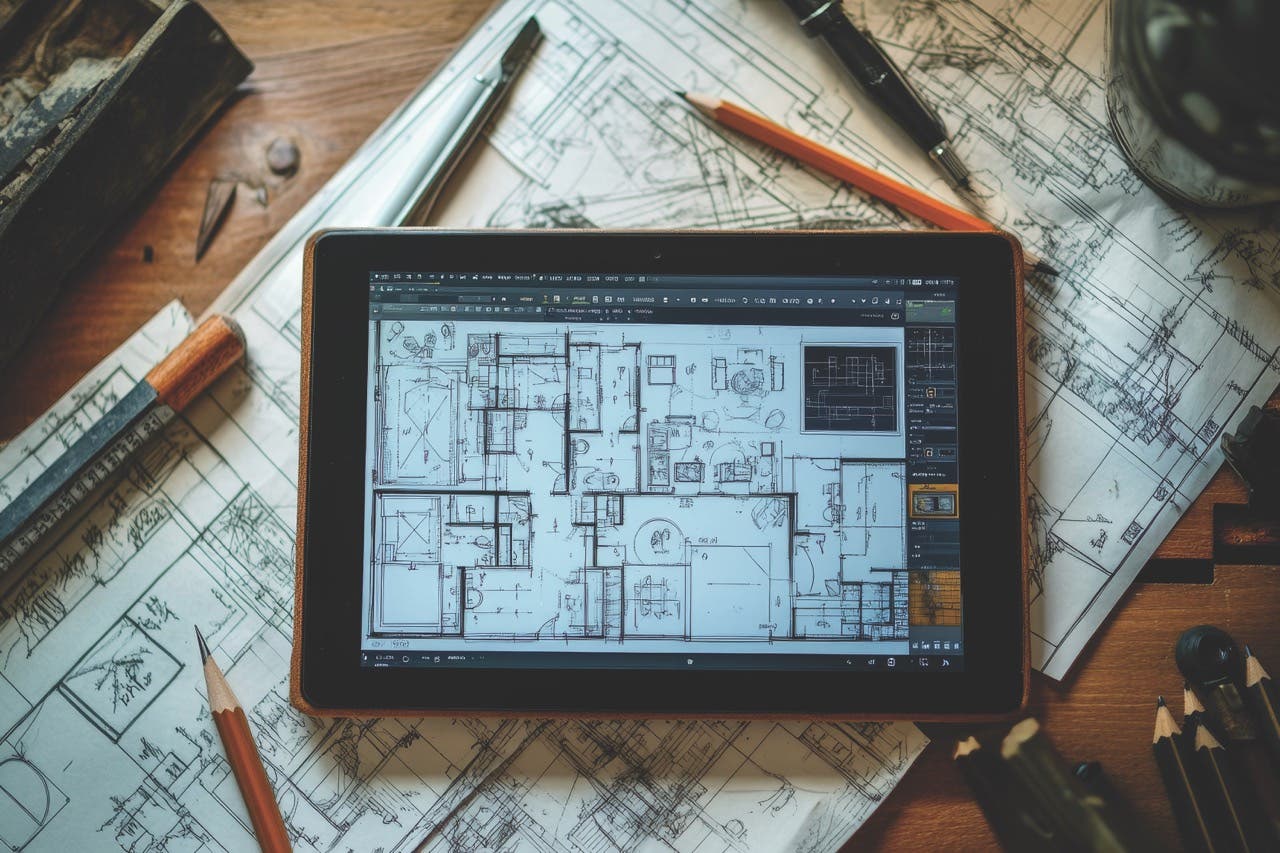
“My goal was to get a job at a large planning firm or large developer and change the way neighborhoods were designed and laid out,” he says.
After college, he struggled to find stable employment in his field. The jobs he secured were short-lived, often ending in layoffs within months. During those periods, family and friends frequently asked him to build furniture or help with home projects.
“When I was laid off, people would ask me to build this or that,” he recalls. “It just kept happening. Eventually it got to the point where I realized I might as well go out on my own.”
In 2009, Burkard officially launched his business.
From garage to custom facility
Like many small-shop owners, Burkard’s early years involved creative use of limited space. He initially operated from his parents’ garage in Downingtown. As demand grew, he and his wife purchased a house in Thorndale with plans to renovate and flip it. Instead, the property became a makeshift workshop.
“I gutted the house and rebuilt it, but I was so busy I needed more space. So I ended up using the first floor as half a shop.”
The back bedroom became a spray booth. The dining room served as a staging area. A table saw occupied the family room.
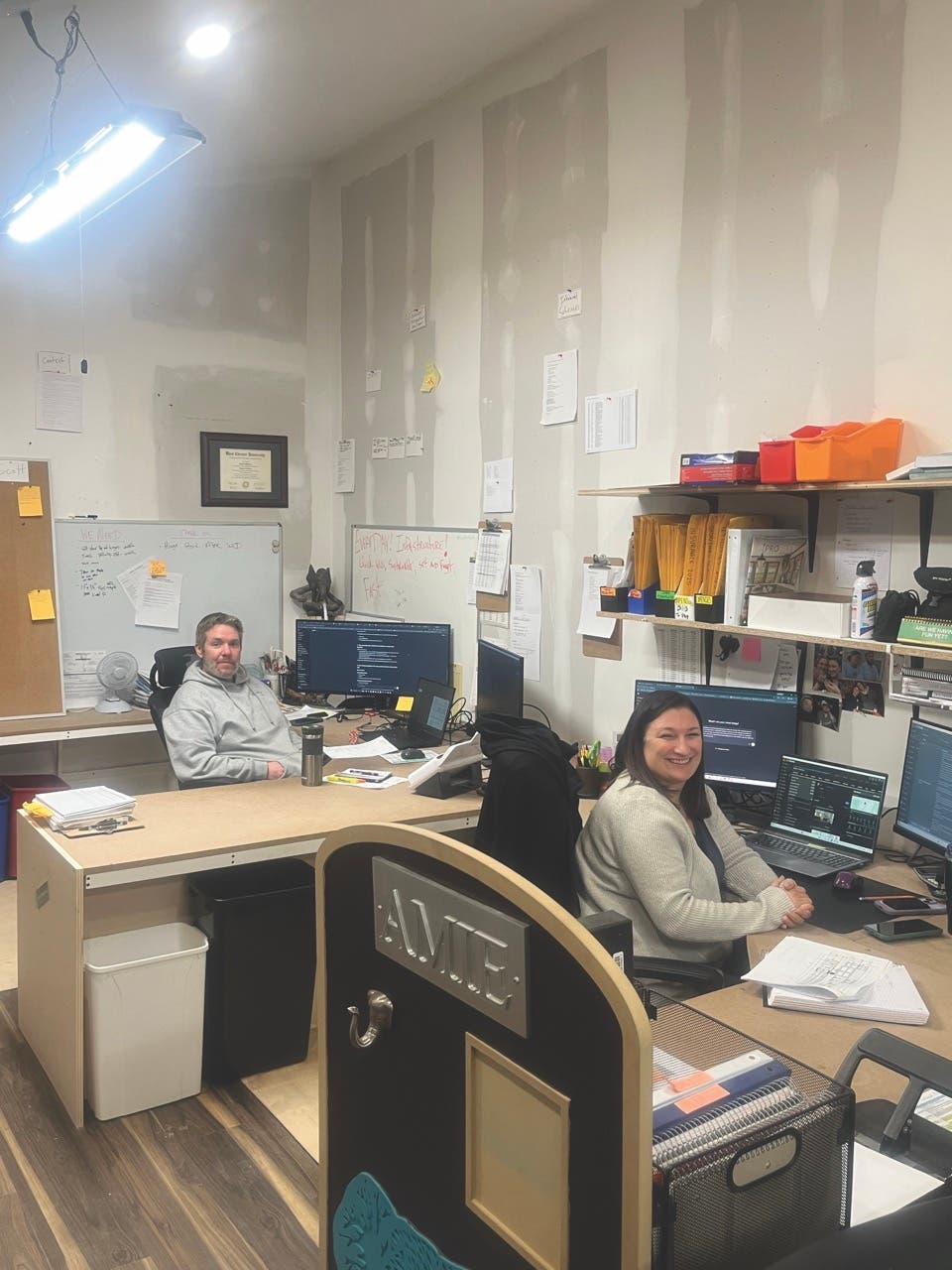
Six years ago, Burkard constructed a dedicated shop next to his home on 2.5 acres. Completed in 2020, the building features a 2,000-sq.-ft. footprint with 3,200 sq. Ft. of total usable space, including a mezzanine for offices.
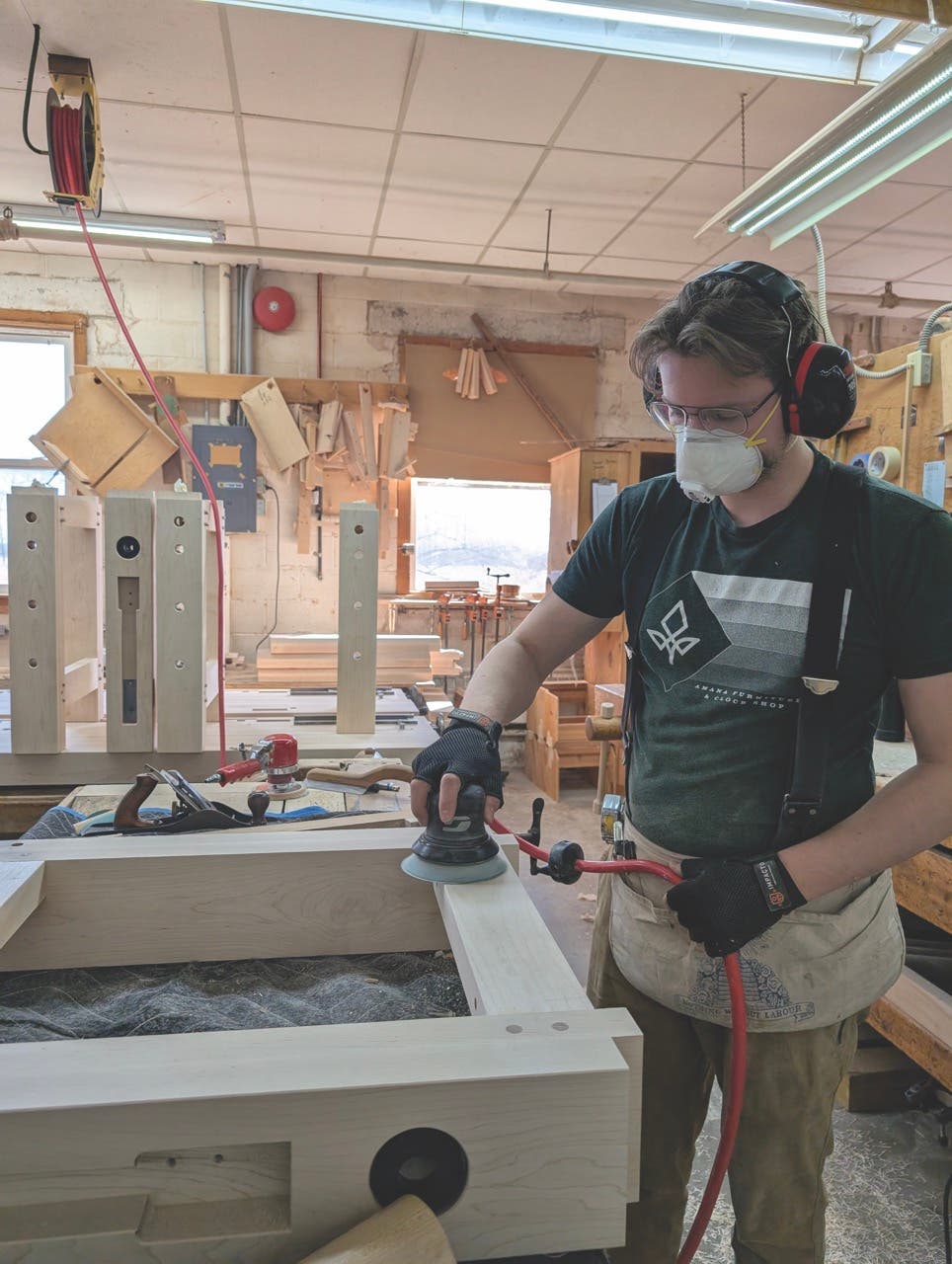
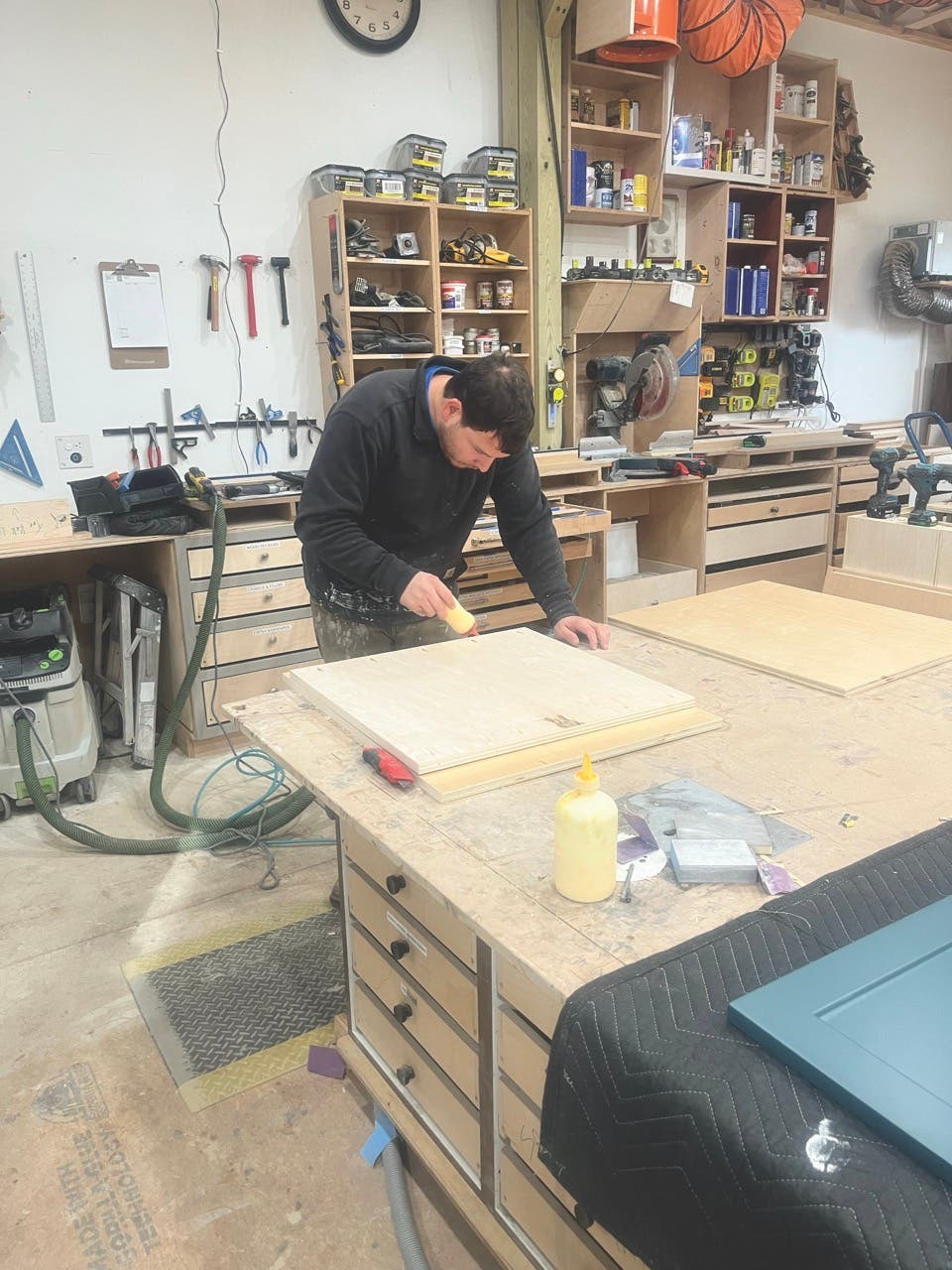
When the facility opened, the crew consisted of Burkard and two employees. Today, the company employs six people: two in the office, three in the shop, and Burkard splitting time between production and administration.
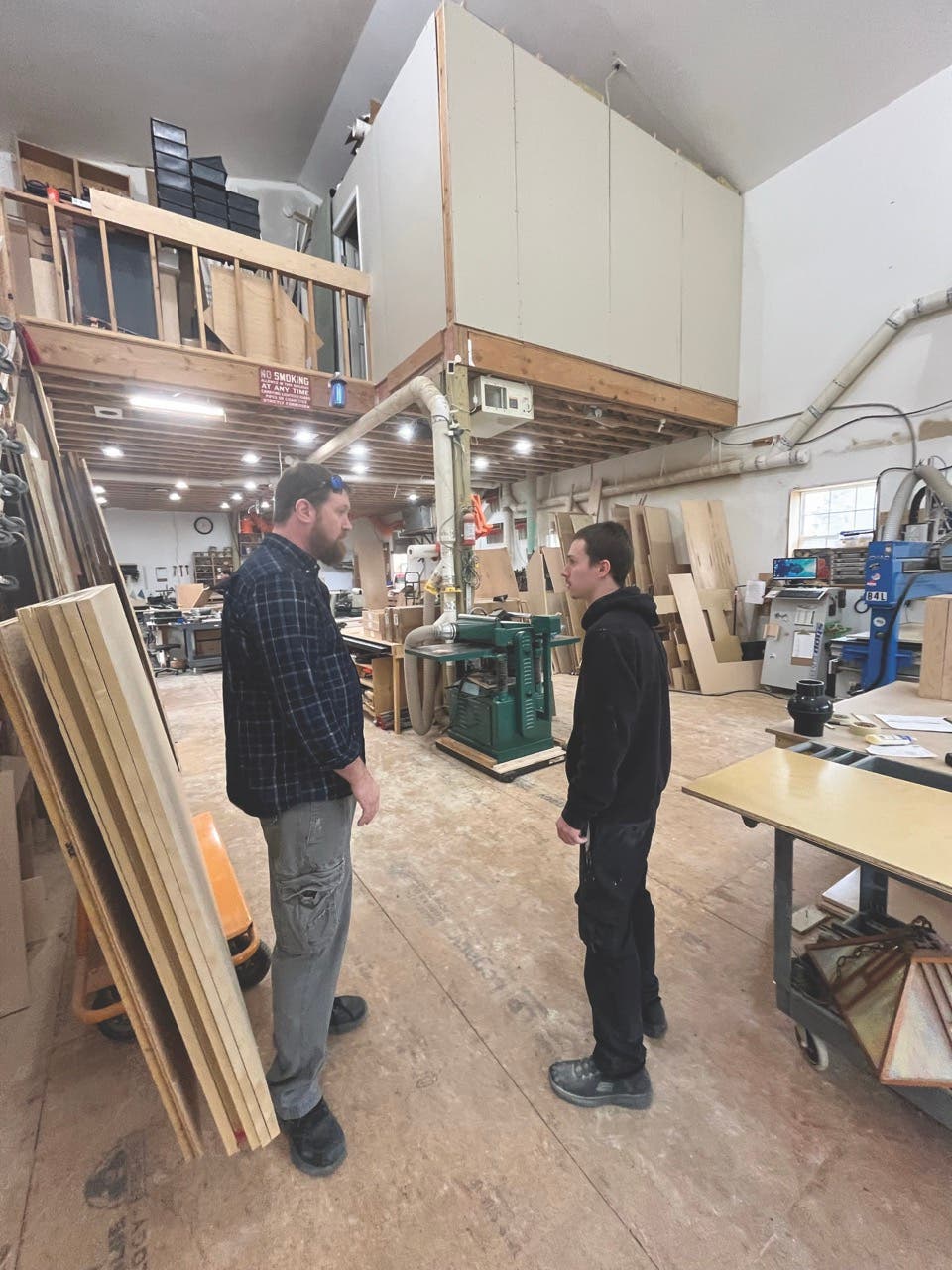
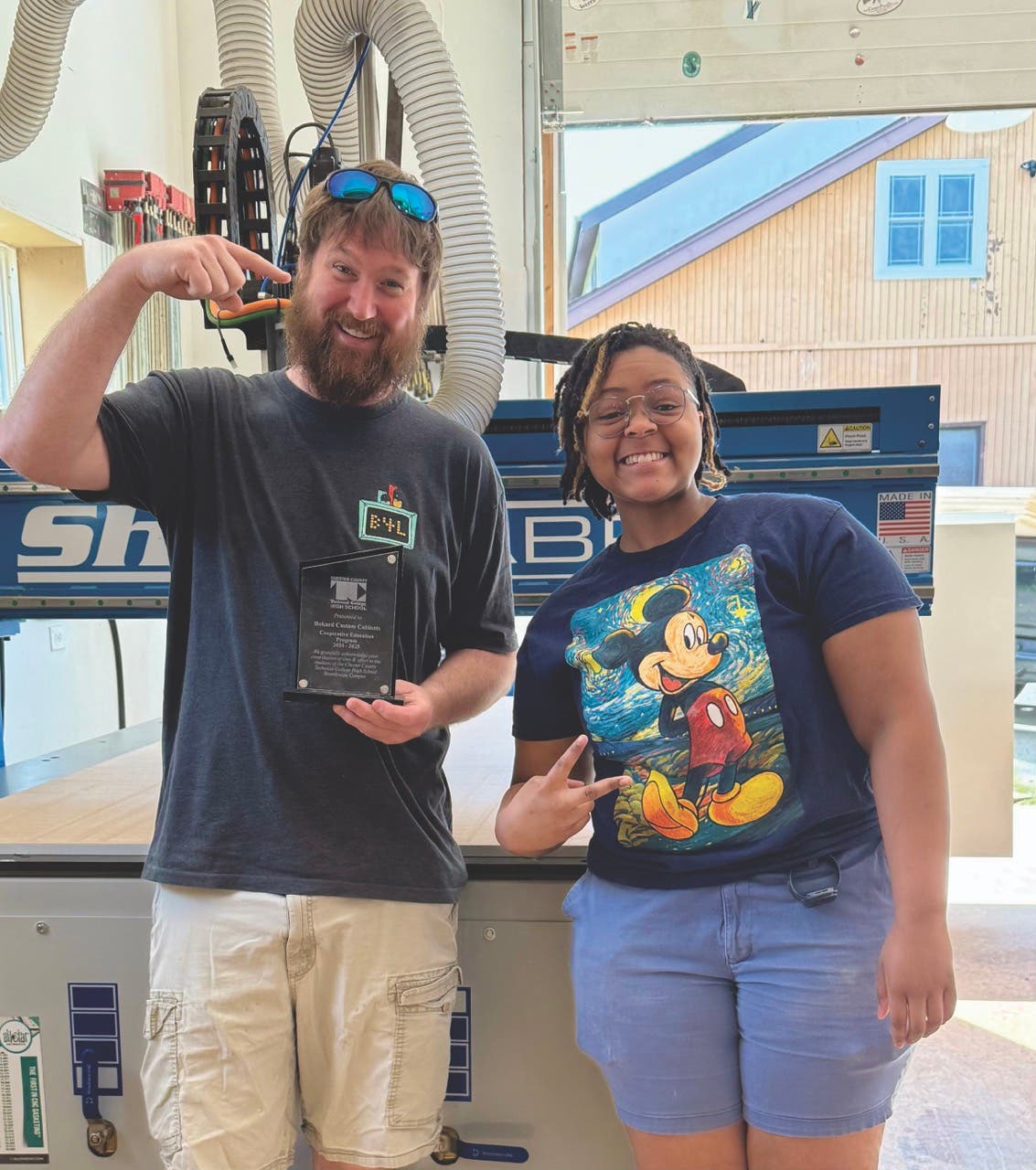
employee Logan Ed
Focused service area, flexible mindset
Burkard typically serves clients within an hour and a half drive. Key areas include Downingtown, particularly within the Downingtown Area School District, and Kennett Square, though the team travels farther when projects merit it.
“We don’t like to go too far, but we will. It depends on the job. If it’s worth it and it’s going to be fun, sure.”
The company focuses almost exclusively on residential work. Over the years, Burkard estimates completing only about 20 commercial jobs. Kitchens account for 60 to 70 percent of the workload, with the remainder divided among built-ins, vanities, furniture and specialty trim projects.
The shop once handled bathrooms and basement renovations, but Burkard narrowed the scope.
“We used to do more full remodeling. Now we’re really focused on cabinetry.”
That specialization has helped maintain consistency. While business ebbs and flows, the overall trajectory remains steady.
“There have been slow periods. Earlier in 2025 it was quiet for a bit. But we’re solid now and booked out.”
An eclectic portfolio
True to Burkard’s philosophy, the shop’s portfolio varies widely.
“We’re a pretty eclectic shop. We don’t do the same thing over and over.”
Recent projects include a kitchen refresh featuring stained maple cabinetry, dark blue painted built-ins, and refinished cherry Adirondack chairs for a neighbor. Each reflects different aesthetics, and Burkard encourages clients to embrace their personal tastes. However, certain trends persist.
“We still see a lot of painted Shaker cabinets. That style has been king for a long time, and it’s still strong. But we’re starting to see more walnut and white oak with clear finishes.”
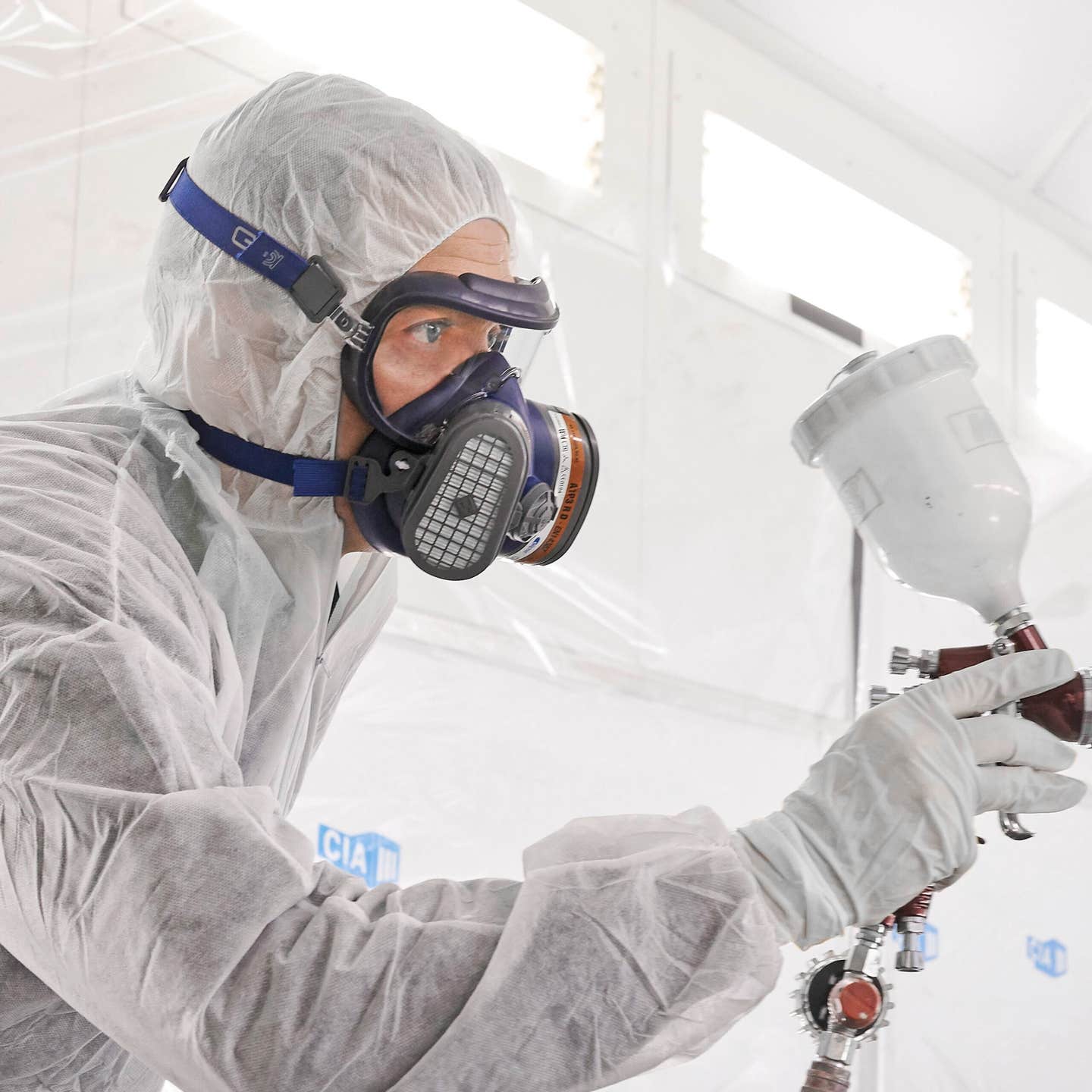
As a turnkey operation, the company handles design, fabrication, finishing and installation in-house. An additional revenue stream has developed through partnerships with local painters who specialize in cabinet refinishing. The painter sells a kitchen refresh, and Burkard’s team fabricates new doors. The painter sprays the cabinets and doors, and Burkard returns for final installation.
“That’s been a great relationship over the last couple of years,” he says.
A game-changing investment
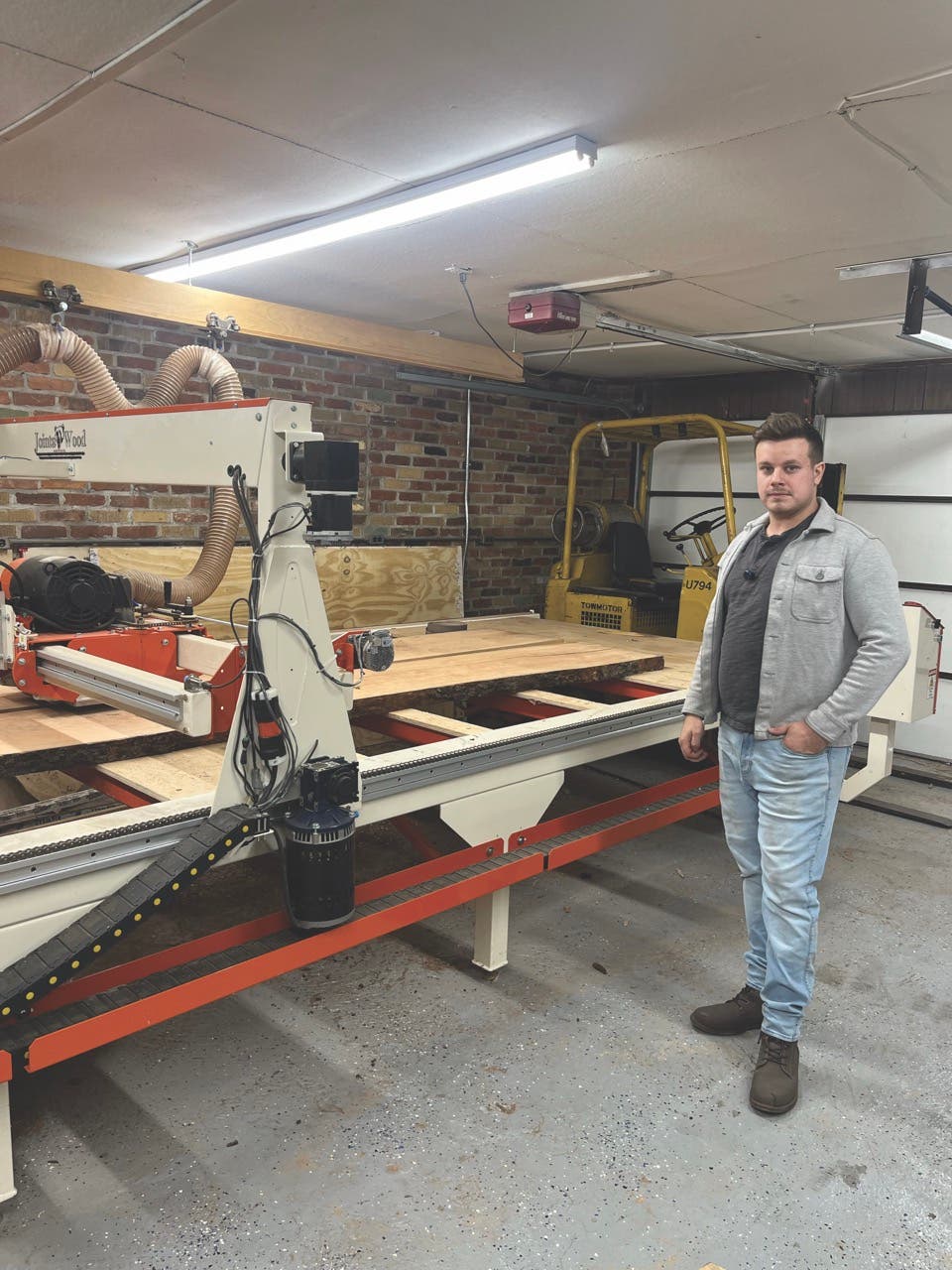
Two years ago, Burkard purchased a ShopSabre IS 408 CNC machine, an investment he calls transformative.
“It opened up a whole new world,” he says.
He recalls fabricating a simple 36” x 42” vanity before acquiring the CNC — a unit that required several hours of cutting, drilling and assembly preparation. Shortly after installing the machine, he received an order for an identical vanity.
“It took 13 minutes. It was insane. It’s been a complete game changer. I don’t think about the build process the same way anymore.”
The CNC dramatically improved efficiency, particularly in door production and sheet goods processing. It also sparked interest in technology and optimization. Burkard now evaluates every process through the lens of efficiency.
“The CNC changed how we operate. It pushed my thought process toward optimizing everything.”
Space constraints limit additional machinery, but Burkard believes one well-chosen piece of equipment can significantly increase output. He has started experimenting with emerging technologies, including a 3D printer.
Initially, the printer produced painter’s pyramids — small stands used in spray booths — at a fraction of retail cost. But the experiment expanded his thinking.
“I’ve started looking into 3D scanning door profiles, digitizing them, and running them through the CNC. We could print sample doors, prototype ideas, or even think about outdoor cabinetry components in the future.”
Burkard has also incorporated artificial intelligence into operations. He spends considerable time nesting cabinet parts and doors on plywood sheets to minimize waste. Recently, he started exploring AI-assisted nesting to streamline the process.
“I spend an insane amount of time trying to use as much material as possible with as little waste as possible. So, I’ve been working with AI and feeding it information to help optimize layouts.”
Despite investments in advanced machinery, Burkard’s business remains built on relationships. The referral-based model has sustained the company for 15 years, and Burkard remains committed to serving diverse clients. By refusing to limit the company to luxury kitchens or narrow aesthetic niches, he has created a steady pipeline of varied work. From modest updates to full custom builds, each project builds the company’s community reputation.
“Everyone has their own style. Our job is to bring that to life.”
Learn more at burkardcustomcabinets.com.
Originally published in the April 2026 issue of Woodshop News.