
CNC Software Advances Put Powerful CAD/CAM Within Reach of Every Shop
Today’s modular CAD/CAM platforms offer scalable solutions for shops of every size
I programmed my first computer numerical control (CNC) machine around 1996. Back then, every X, Y and Z coordinate needed to be known and written into a text file to run the machine. It was a 2.5-axis operation, and even a simple cabinet side could take most of a day to program. Post processors had to be custom-written to match the G-code file to each specific machine.
The story is different today. Computer-aided design and computer-aided manufacturing (CAD/CAM) packages work in 2D and produce 3D models. High-end software can process entire rooms of cabinets and output everything needed in one session. Sophisticated 3D cutting previews allow for experimentation, checking and refining programs before cutting any wood. Time studies and cut lists can be used for calculating project bids.
At the top end of the market, there are fully integrated programs that push the definition of CAD/CAM software. Companies building retail spaces, office suites or hotels should consider these comprehensive systems. At this level, some of the programs may be familiar to you, but many of them have evolved to be integrated with former rivals offering streamlined sharing and workflow.

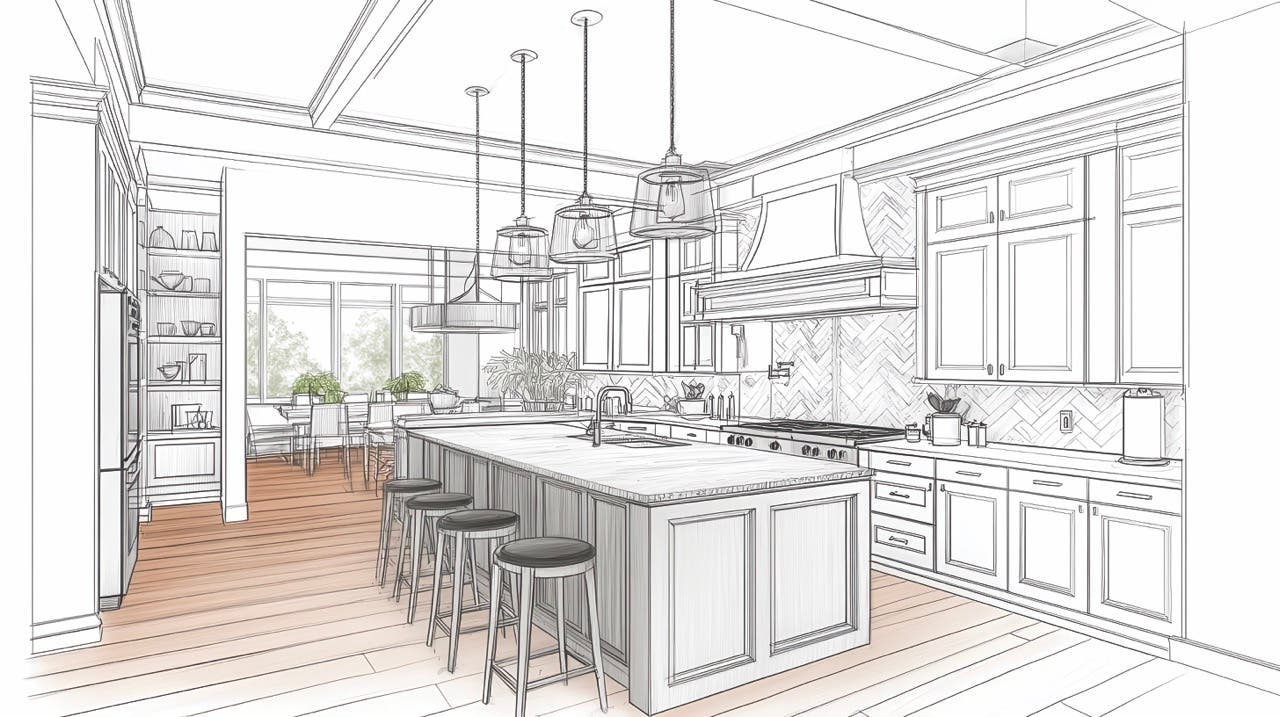
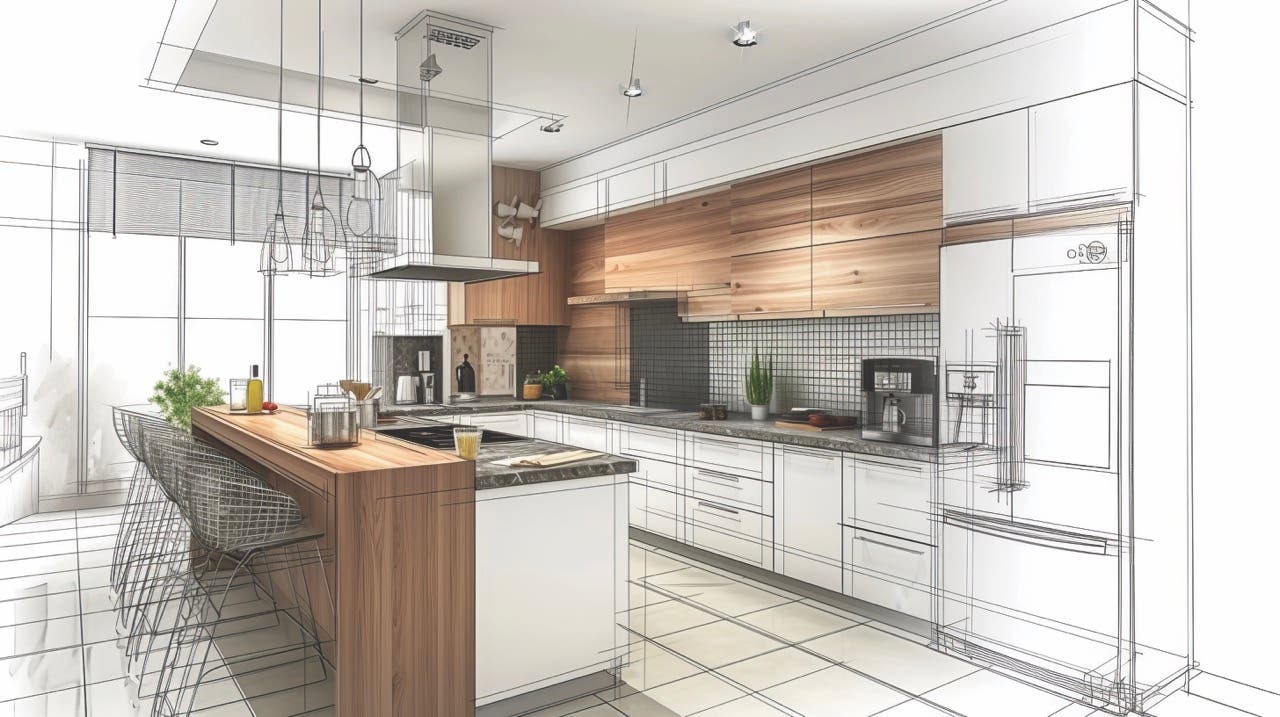
Hexagon (hexagon.com), owner of the AlphaCAM and Cabinet Vision brands, features Cabinet Vision Core, which can be used to design and manufacture cabinets and closets as rooms or suites rather than individual box units. The program can be enhanced with add-ons such as Cabinet Vision Design, which produces walk-through 3D renderings and estimates; xCountertops for countertop configuration; xOptimizer for material yield; and xMachining to create G-code for different machines. More than 12 add-ons allow users to customize Cabinet Vision without paying for unnecessary features.
For companies serving high-end residential or retail customers, AlphaCAM offers similar software options. AlphaCAM Core handles CAD design imports, toolpath creation, simulations and reporting. AlphaCAM xPositional can be added for aggregate use with additional axis positioning, while the xSimultaneous module enables full 5-axis interpolation.
Like Cabinet Vision, AlphaCAM offers modules to improve nesting, fixturing and parametric programming. Modules can be selected individually to build a customized system that evolves with the business.
Modular CAD/CAM systems are becoming the norm. Software now integrates into every manufacturing stage — from sales, estimating and purchasing through optimization, manufacturing and assembly. This modularity benefits users who get to pick, choose, and pay for only needed features.
Mozaik (mozaiksoftware.com) exemplifies this approach by offering design and manufacturing support without toolpathing output. Mozaik Manufacturing includes cabinet design functions for custom makers not using fully integrated CNC manufacturing. It provides shop drawings, 3D designs, assembly sheets, cut lists, pricing estimates, labels and other manufacturing data. Shops can upgrade to Mozaik CNC as they grow.
Mozaik CNC extends beyond design to provide true-shape nesting and machine-ready G-code. It has user-friendly features — squaring remnants and instantly remaking damaged parts — and is capable of producing MDF doors and dovetail joinery on CNC machines.
Mozaik enables design using selected fasteners including screws, dowels, confirmats and specialty options from OVVO, Lockdowel, Hafële and more. Two-sided machining is simplified with the ability to flip entire sheets or individual components.
Mozaik Enterprise offers multiple user licenses with administrative controls for growing businesses. Administrators can restrict access to minimize distractions and delegate complex jobs. Access to machine controllers and databases can be limited to qualified users. The system includes job management tools and autosaves work every five minutes to protect against power outages or network failures.
For smaller shops focused on built-ins, furniture or musical instruments, other CAD/CAM programs offer appropriate design and pricing. Enroute from SAi (thinksai.com) provides design and manufacturing capabilities for shops handling standalone projects such as restaurant seating or signage.
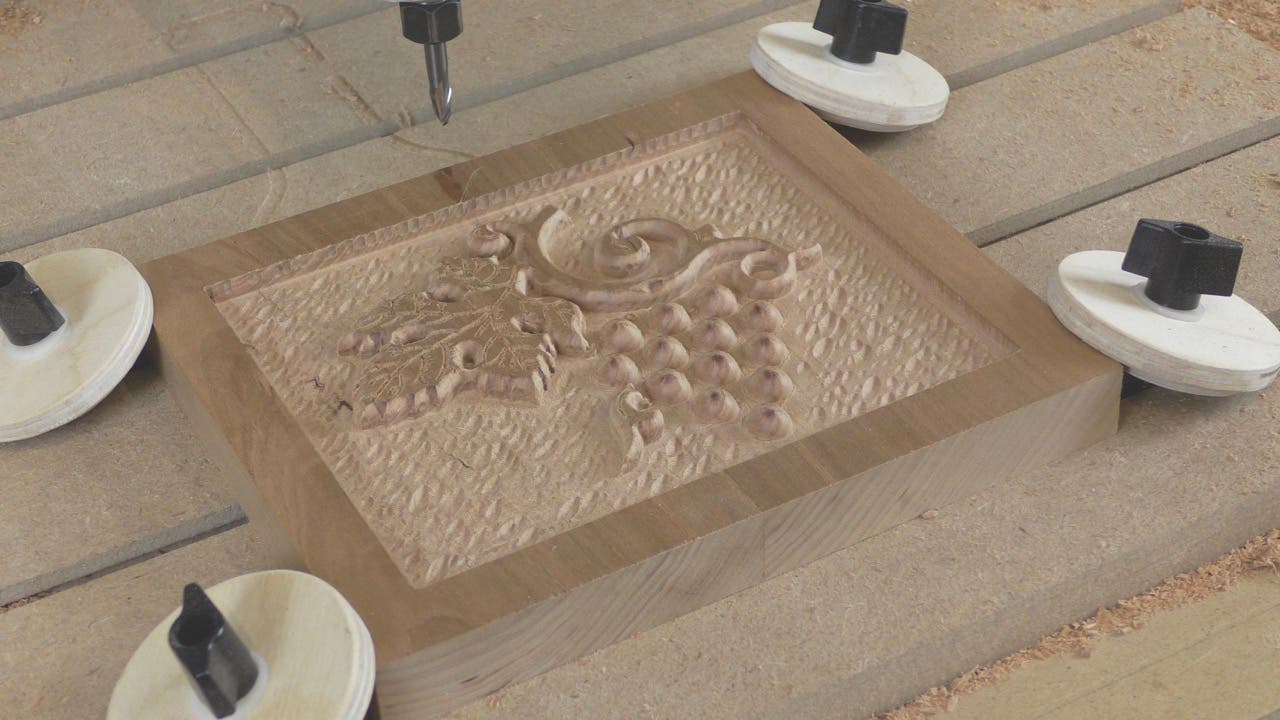
Enroute specializes in 3D design and milling, particularly for creating textures in wall panels and carvings. It includes vectorizing capabilities for converting images into machinable vectors. But one of the most interesting features of Enroute is the ability to customize and automate toolpathing based on specific machines, tools, and materials.
Each Enroute toolpath can be saved as a template for future use. Once optimal settings are found for cutting 3/4-inch mahogany plywood, they're saved as a template. Future toolpaths for the same material can be created by selecting that template, eliminating repetitive parameter selection. Over time, this ‘templating’ process makes programming faster, especially when working with common materials and tooling. Enroute offers multiple functionality levels.
CAD/CAM systems have improved in capability while decreasing in price, making powerful machining functions accessible to small shops integrating their first CNC. Several options serve this entry-level category.
AutoDesk (autodesk.com) offers Fusion CAD/CAM with multiple functionality levels: Fusion, Fusion for Manufacturing, and Fusion for Design. The base Fusion package provides integrated CAD/CAM for designing, toolpathing and outputting G-code for typical 2.5-axis woodworking projects. It includes real-time team collaboration for growing teams or cooperative work with clients and partners. The 3D modeling environment allows easy sharing with other manufacturing platforms including 3D printers.
Fusion for Manufacturing expands Fusion's capabilities to include fourth- and fifth-axis operations, toolpathing for rotary indexing and turn-mill operations, and the ability to inspect and probe parts during production. And as your needs grow, Fusion for Design offers advanced simulation studies, generative design, advanced surfacing and mesh tools, and tools for plastic and sheet metal.
KCD Software (kcdsoftware.com) defines vertical integration as “allowing custom shops to move into manufacturing, optimization, laser measuring, and component outsourcing systems at their own discretion and at their own pace.” What it’s actually doing is letting CNC software programs ‘talk’ to the shop’s machines and coordinate with outsourcing partners. The more automated the communication, the less training the shop’s crew needs.
BobCAD (bobcad.com) is an ‘early user’ program with modules that users can select to fit their specific work requirements. The CAD Design module serves as the foundation, which can be built with toolpathing and G-code modules. Then it’s on to waterjet and laser programing, if you prefer. Though positioned as an entry-level option, BobCAD-CAM includes a module for SolidWorks integration — unusual at this price point.
VCarve Pro from Vectric (vectric.com) is popular among first-time CNC users. The software comes bundled with numerous CNC machines and creates drawings natively, imports from other programs, and handles text with word processor-like functionality. It imports and toolpaths 3D models and offers laser and rotary modules. Users can upgrade to Vectric's Aspire, which functions similarly to VCarve while adding the ability to convert images and drawings into 3D relief models for carving.
CAD/CAM packages exist for every capability requirement. All have learning curves, but most manufacturers offer classes and online tutorials to ease the transition. Many programs operate on subscription models, though not all.
Market competition has reduced costs, improved capabilities, and expanded user options. Today's CAD/CAM marketplace differs dramatically from when I began programming in 1996, offering woodworkers unprecedented power and flexibility at every price point.
Find CAD/CAM sources in our online Resource Guide at resourceguide.woodshopnews.com.
Originally published in the May 2026 issue of Woodshop News.