
Keeping history alive
Bess Naylor reflects on four decades at the bench building and teaching about period furniture.
While many shops pursue contemporary designs and rely on modern technology for efficiency, Bess Naylor is guided by the past. Founder of Olde Mille Cabinet Shoppe in York, Pennsylvania, Naylor has spent more than 40 years dedicated to American period furniture of the late 1600s through early 1800s, building historically accurate pieces and educating others in the craft.
The career has been deeply rewarding, she says, even when challenging.
"Forty years is a long time to watch things unfold," Naylor says. "Period furniture making is a very narrow niche. But those of us who are drawn to it are incredibly passionate. It speaks to us in a way very few other things do, and that makes us committed to sharing it."
Working out of a roughly 600-sq.-ft. studio on her property, Naylor relies largely on time-honored hand tools and traditional techniques to create reproductions of classic furniture forms. While her craftsmanship is widely respected, her greatest influence may be as an educator. Over the decades, she has taught and hosted hundreds of seminars at Olde Mille, bringing together students and master craftsmen from across the country.
As she begins to wind down her teaching schedule and move toward retirement, Naylor reflects on a journey shaped by curiosity, discipline and reverence for history.
A foundation in science and finishing
Raised in the Dover, Delaware, area, Naylor credits her mother and grandmother with nurturing her early interest in furniture. As a teenager, she experimented with refinishing, though her academic path initially led elsewhere. She earned degrees in science and medicine and built a career in clinical science and laboratory medicine.
"I'm a science person all the way through," she says. "The chemistry of wood finishing fascinated me — how colors develop, why finishes react the way they do."
For many years, Naylor taught at the University of Maryland School of Medicine, but her fascination with furniture never faded. A turning point came through George Frank's book "Adventures in Wood Finishing."
"That book lit a fire inside me," she says.
In the early 1980s, Naylor attended a seminar taught by Frank at the late Wendell Castle's studio in Scottsville, New York. Inspired, she began studying historical furniture-making methods in earnest. In 1982, she opened Olde Mille in a former mill building on her property, focusing on historically accurate construction and finishing.
Teaching followed naturally.
"Having been an educator, I wanted to create opportunities for people to learn. I started with small classes and carefully selected instructors who were experts in their area, often learning alongside my students.”
Alongside classes, Naylor began selling hard-to-find finishing supplies, long before online shopping existed. That effort led to a significant partnership with noted scholar and craftsman Eugene Landon (1934-2011), who became both a customer and longtime instructor.
"He was an expert on American period furniture," she says. "That turned into a 20-year teaching relationship, and he was instrumental in my education."
Building a national following
Over the years, Olde Mille became a destination for serious students of period furniture. Naylor's seminars attracted thousands of participants, ranging from beginners to established professionals and published authors.
"It was a wide range of people," she says. "Some knew nothing. Others were experts looking to deepen a specific skill."
Classes typically ran from April through early December, averaging 15 to 18 per year and often spanning multiple weekends. Popular subjects included lowboys, highboys, dressing tables, tea tables, chairs, and boxes.
"When you have access to great teachers who are recognized experts in their field, you have to take advantage of it," she says. "Opportunities like that don't come along often in this field."
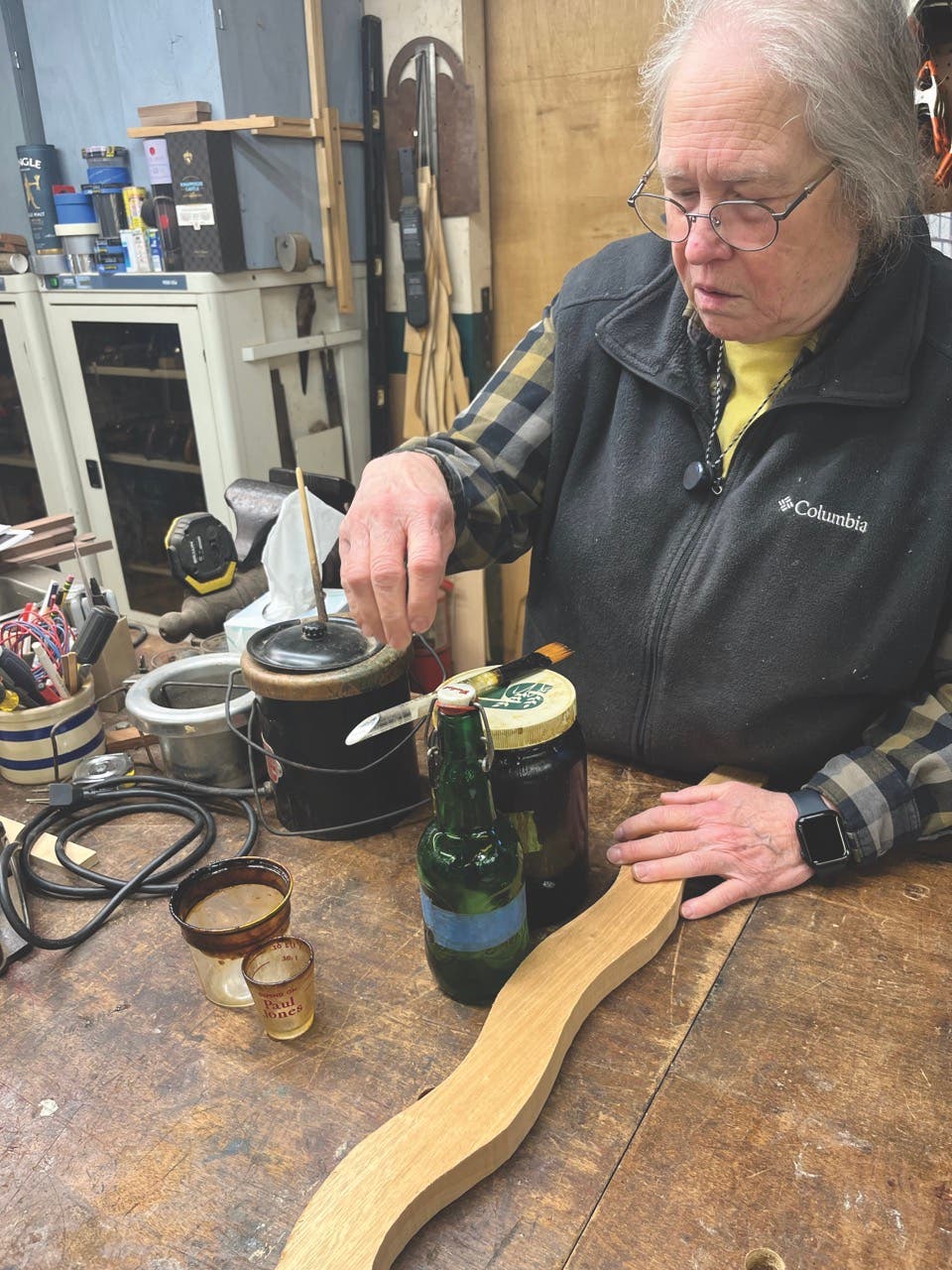
pieces, and even ran her own online business selling
those hard-to-find items.
Drawn to Pennsylvania furniture
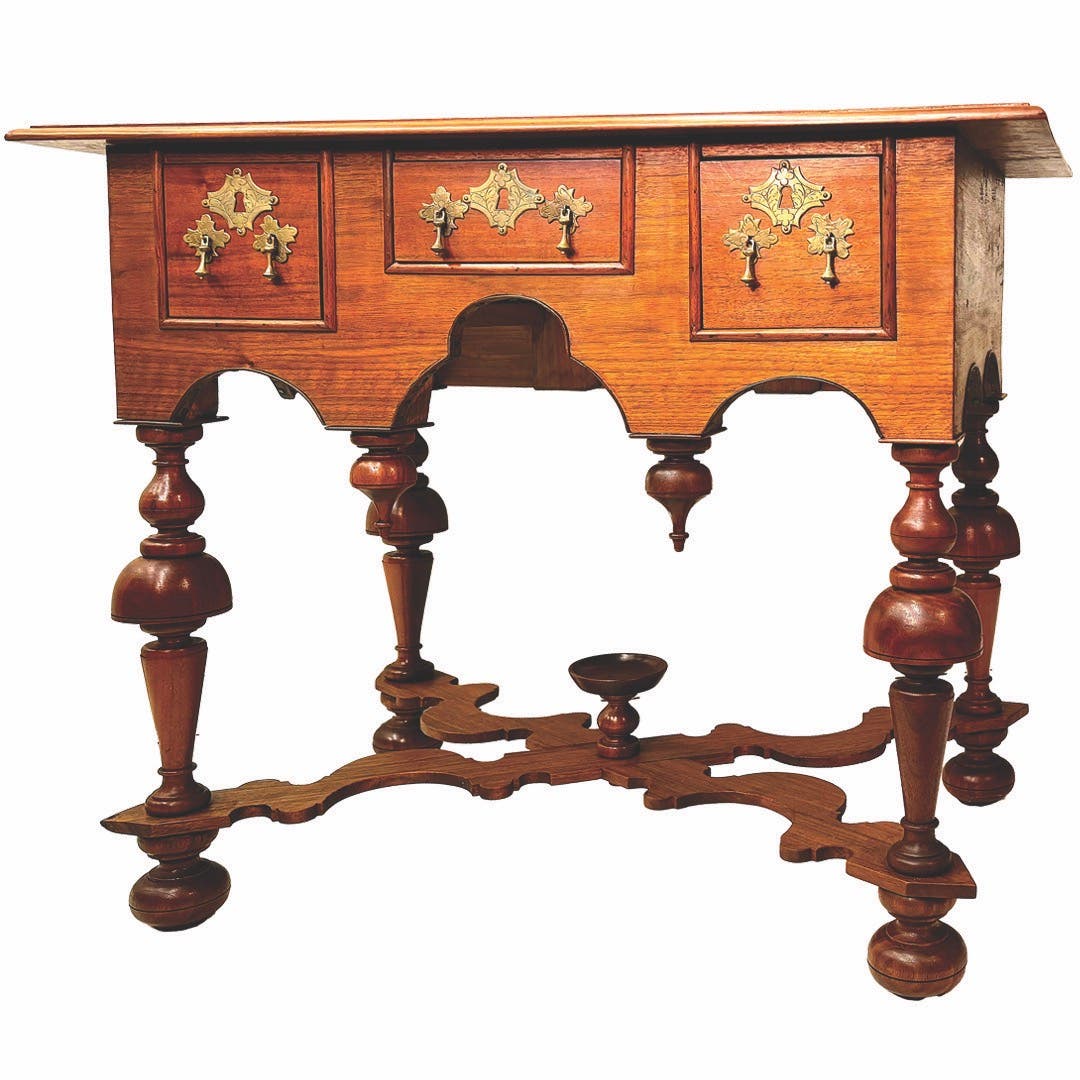
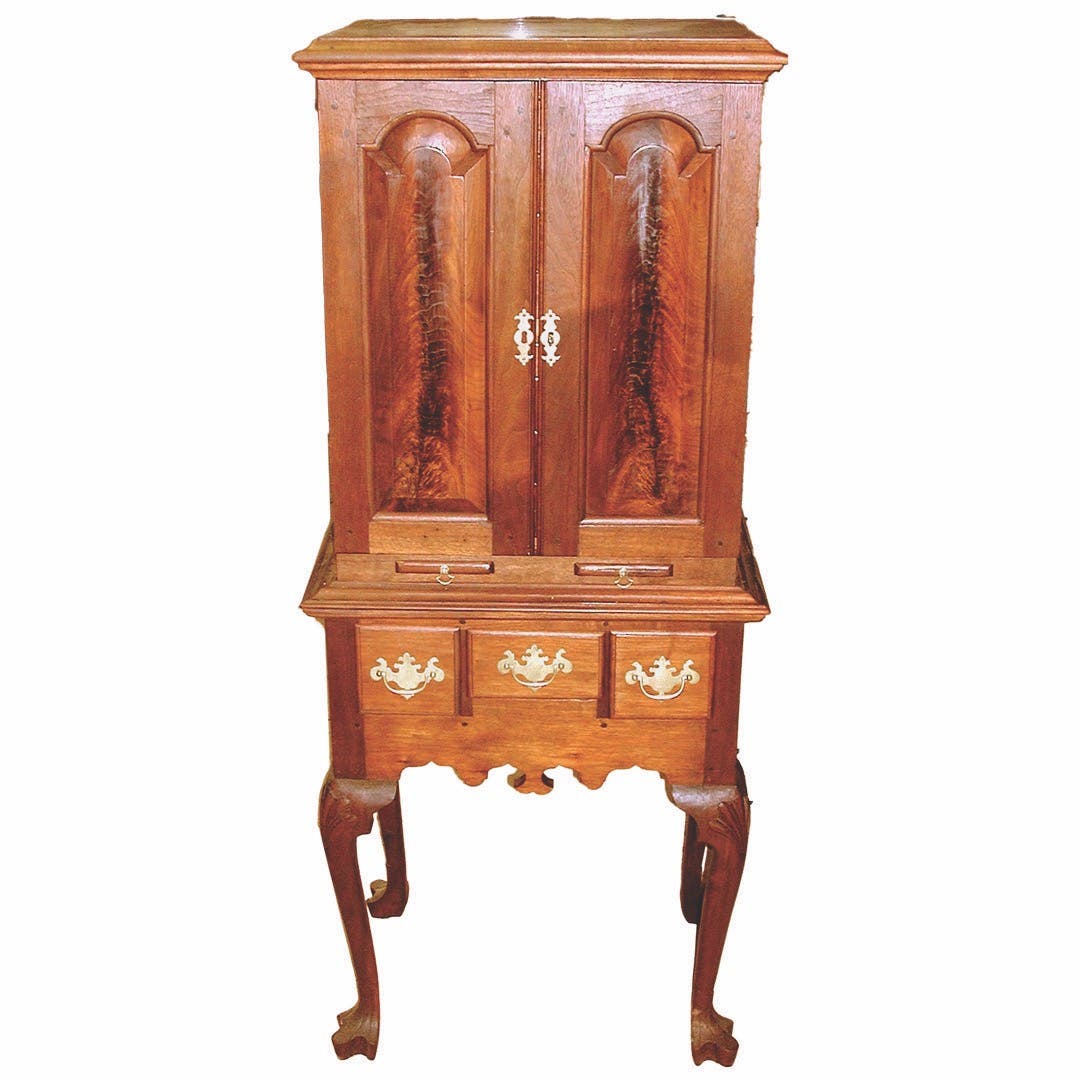
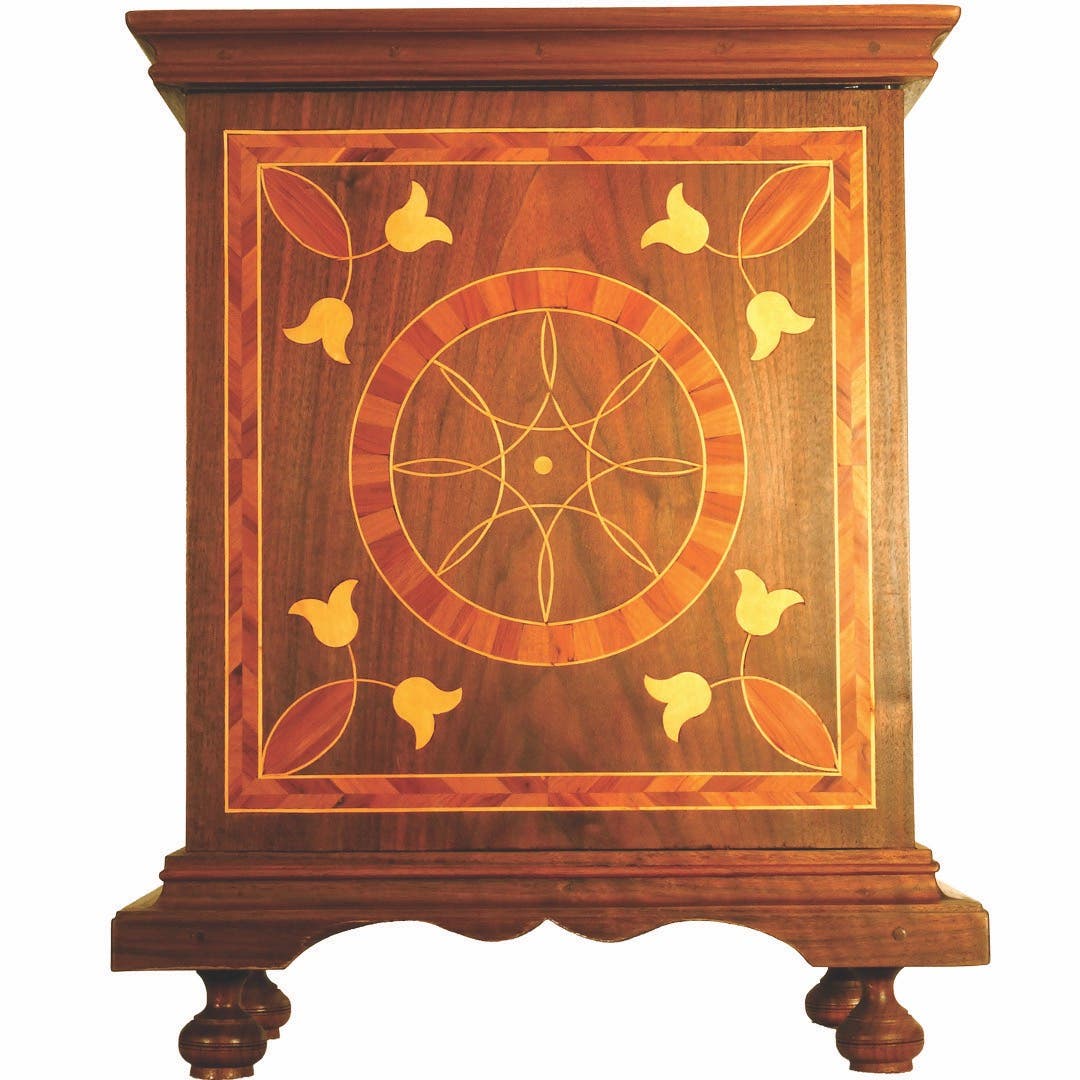
Although Naylor has studied many regional styles, her work focuses primarily on Pennsylvania furniture, particularly from the William and Mary and Queen Anne periods.
"I started out with Queen Anne and Chippendale," she says. "Federal furniture doesn't really speak to me — it's often very linear. Queen Anne, though, is all motion and sculpture."
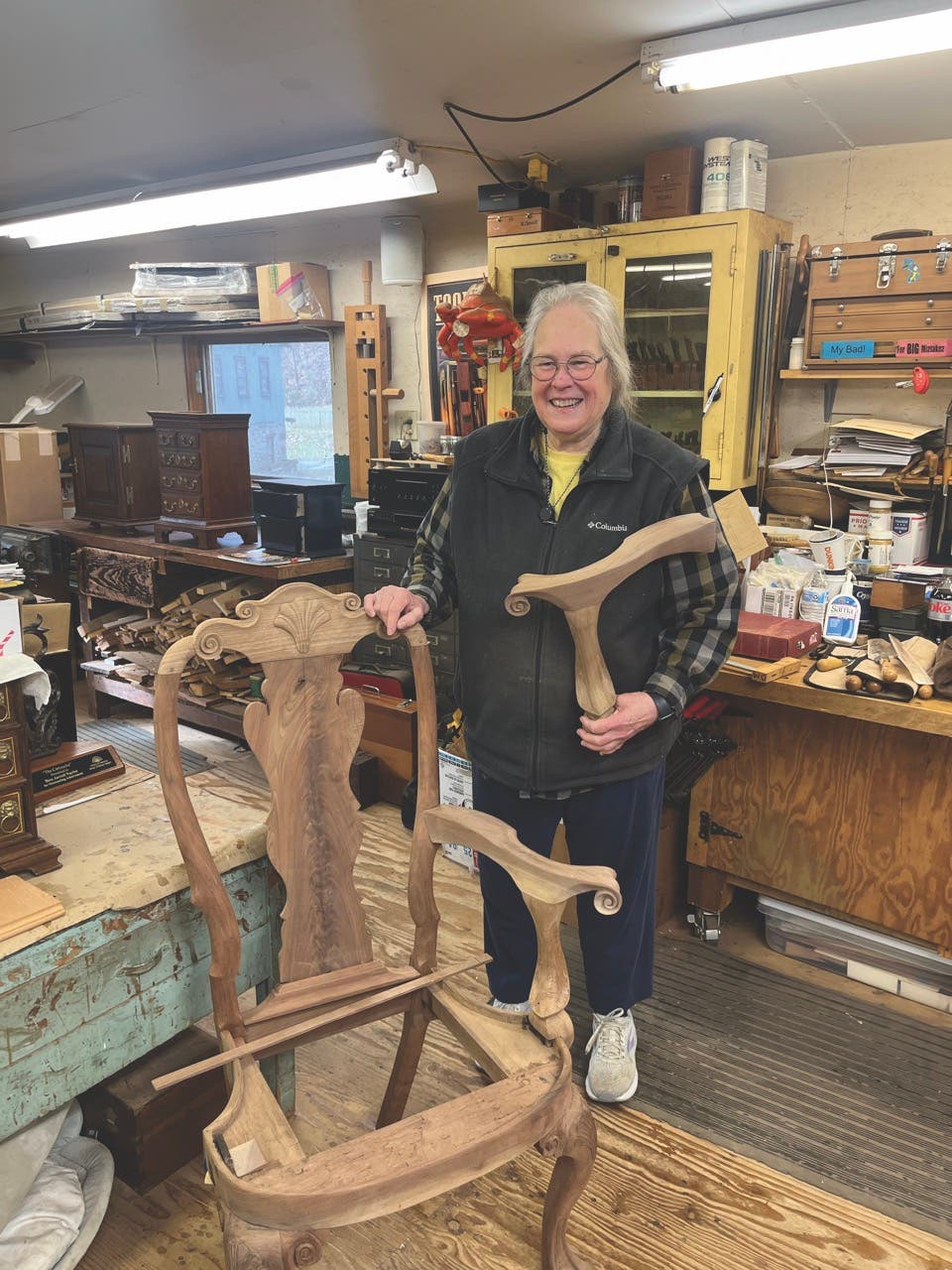
She gestures to a chair underway in her shop.
"There's hardly a straight line on it," she says. "That sculptural quality is what makes it so compelling. William and Mary furniture, especially, represents a burst of innovation in the colonies with new forms, new techniques. It's beautiful furniture."
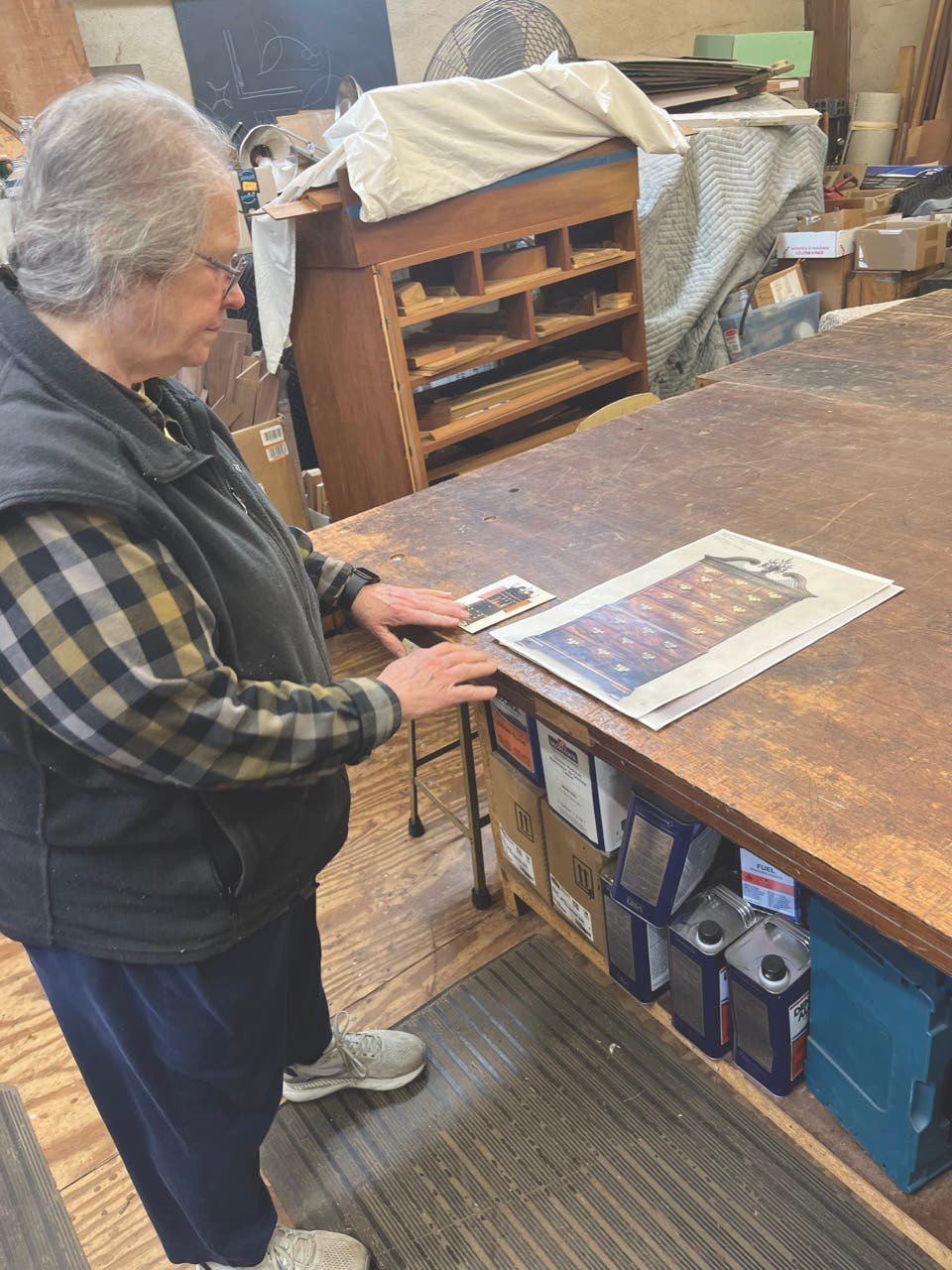
To ensure historical accuracy, Naylor has spent countless hours studying original pieces in museum collections, including Winterthur, the Philadelphia Museum of Art and the Yale University Art Museum. She has also conducted research at numerous Pennsylvania institutions, including the York County History Center, Reading Public Museum, Lebanon County Historical Society and the Schwenkfelder Library & Heritage Center, as well as through major auction houses.
"I study tool marks, talk to curators, and learn about the environments these pieces were made in," she says. "No electricity, no power tools, no lighting. That context matters."
While she occasionally uses modern tools, she is deliberate about maintaining a hand-crafted appearance.
"I don't have enough years left to build everything entirely by hand," she says. "But I'll compromise and use a power planer, then hand-plane or scrape so it still has that hand-worked look."
Recognition and legacy
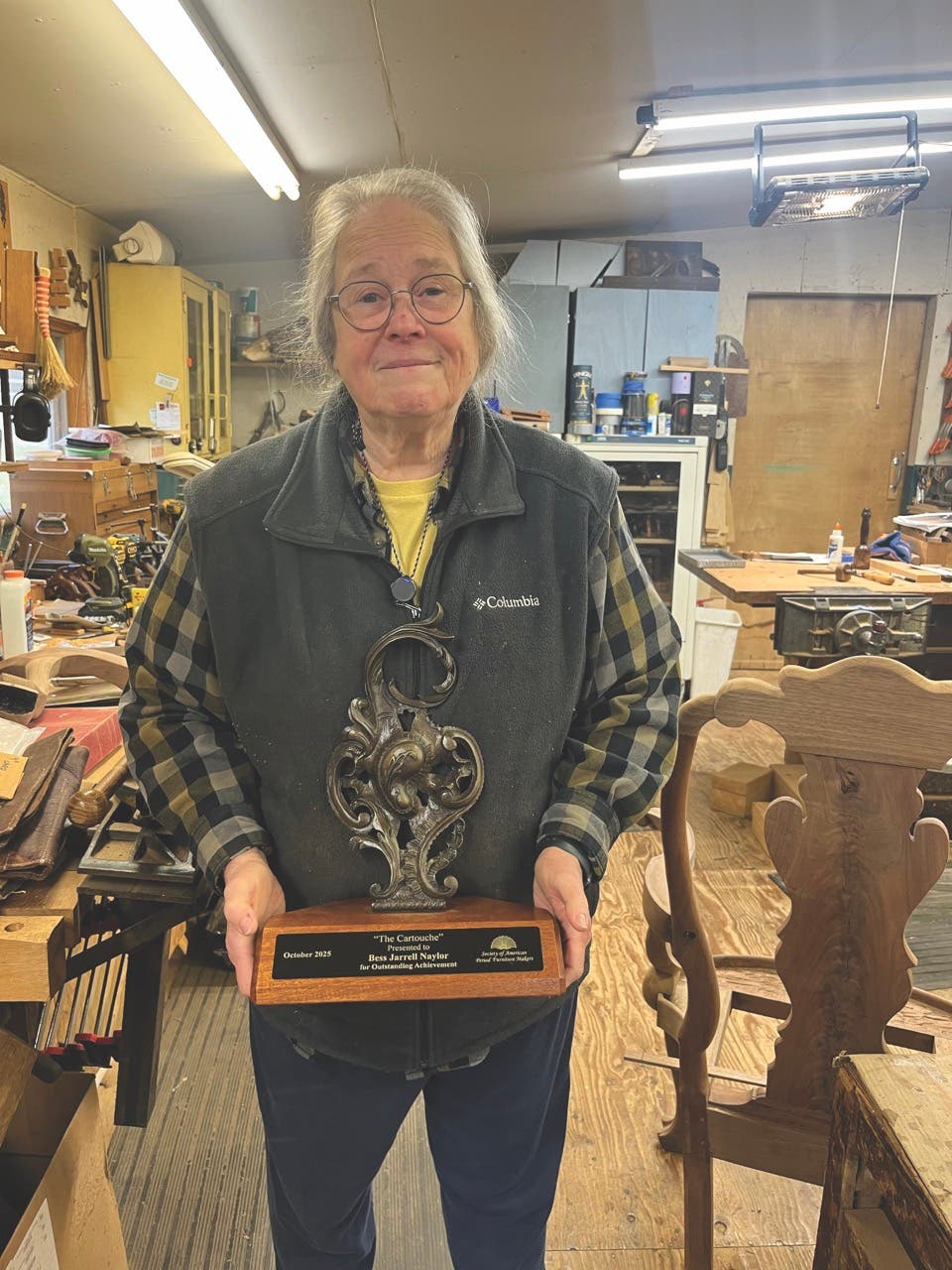
Early in her career, Naylor joined the Society of American Period Furniture Makers, an organization devoted to preserving traditional methods. Last October, she received the group's highest honor, the Cartouche Award, presented at the annual conference in Williamsburg, Virginia.
Despite the recognition, Naylor is realistic about the place of period furniture in today's market. She acknowledges that younger generations often prioritize affordability and convenience. Still, she remains committed to tradition.
"Today we don't have much of an appreciation for that kind of dedication," she says. "Very few of us start at 10 or 12 and stay with it our whole life with such a committed lifestyle where that's what you did for five or six days of the week. I do that now because I like to do it, and it speaks to me."
She contrasts period furniture with mass-produced alternatives.
"There's value in a piece that can last centuries. Something that can be repaired, reused, and still function beautifully after 300 years — that's phenomenal.
"If I'm going to build something, I want it to be the best example I can make — useful, functional and beautiful."
Winding down
Naylor has 20 to 25 partially completed pieces in her shop that she hopes to finish over the next few years. To make that possible, she has scaled back her seminar schedule.
"They take a lot of energy, and I'm running low on energy," she says. "I'll choose three or four projects this year, and that's my limit."
When asked about career prospects in period furniture making, she offers candid advice.
"I've seen loads of individuals come through who are excited about starting a career in woodworking, super excited about period furniture, and they think they're going to make a million bucks going into this as a business," she says. "The truth is, very few people make it. There are some who are successful, and to them I say more power to them, but there are a couple things against you.”
She emphasizes that craftspeople must decide whether they're committed to traditional methods or modern production, and they must be realistic about demand.
She notes that restoration and conservation can offer opportunities, though such positions are increasingly scarce.
For Naylor, the reward has never been financial.
"It's a hard way to make a living, but it's an important way to work," she says. "It's not about building a piece to sell. It's about learning how to build it and making something that looks like it belongs in a museum."
Learn more at oldemille.com.
Originally published in the March 2026 issue of Woodshop News.